
Glascock County Civil Docket Searches
Know your court first. The Superior Court of Glascock County handles the broad civil cases. Clerk Kristie Stephens files and maintains them. Magistrate Court takes the rest. Its civil claims run up to $15,000, along with small claims, garnishments, dispossessories, property foreclosure, and abandoned motor vehicles. So a search limited to PeachCourt can miss a lower-court matter entirely.
For Superior Court civil cases, the Georgia E-Access directory points you to PeachCourt. You register and sign in before any case or document functions open up. A case number is the cleanest search when you have it. Party-name searching works too. But officials publish no local wildcard rules, date filters, historical cutoff, or civil case-number example. Whatever match comes back, confirm the county, court, parties, and status.
- Read the filing or notice and identify Superior or Magistrate Court.
- For Superior, register or sign in to PeachCourt and select Glascock County and court.
- Enter the case number or party name and compare the returned parties.
- Open the docket to review filings, service, motions, settings, and disposition.
- Contact the correct clerk for a missing file or an official copy.
Mandatory Glascock Civil E-Filing
E-filing is not optional here. The Glascock County Superior Clerk requires all civil cases to go through PeachCourt. The Georgia Courts e-file directory separately marks Glascock Superior civil filing as mandatory with that provider. Remember the limits, though. The rule governs filing into Superior Court. It does not make PeachCourt a statewide anonymous search, and it does not pull Magistrate civil cases into the Superior docket. The state directory page linked above shows the official route. Use it to identify a court's electronic filing provider.
A new filing walks a set path. You choose county and court, then case type and details. Next come parties, service method, and the represented party. After that comes document type, the PDF, and any generated forms. Payment, review, submission, and a final redaction confirmation close it out.
Civil Dockets: What They Show
Uniform Superior Court Rule 39.2 sets the best official template. Use it for reading a Glascock Superior civil docket. Expect an action number, the cause of action, attorneys, parties, and the filing date. Costs are tracked too. The rule calls for advance and added costs. It also covers the date and type of service, the disposition and its date, and the side that won the judgment or verdict. Also listed: mistrial, trial date, jury status, and the final-disposition judge, the fi. fa. date, and references to minutes, the final record, appeals, and stored files.
| Action number | The court identifier; no current local number pattern was published. |
|---|---|
| Cause and parties | The claim type, plaintiff, defendant, and attorneys of record. |
| Filing and service | Filing date plus the date and method of formal delivery. |
| Proceedings | Pleadings, transcripts, motions, settings, and trial information. |
| Disposition | Outcome, date, judgment side, judge, and later appeal references. |
A docket summarizes; it does not reproduce. An entry may point to a complaint, answer, order, transcript, or judgment without showing the full document itself. That underlying file is a separate part of the court record.
Glascock Rule 39.2 Fields
A few civil terms trip people up. The cause of action names the kind of claim being made. Service means formal delivery of process, and its date can differ from the filing date. The disposition is the recorded end result. A fi. fa., short for fieri facias, is an execution document tied to a judgment. And a remittitur is the appellate mandate sent back to the trial court after review.
Case number: The court's action number for the case.
Peach number: A PeachCourt transaction identifier, not the court case number.
Service: Formal delivery of court process, recorded by date and type.
Disposition: The recorded final action, with its date.
Read these fields as a whole. A filing date does not prove service happened. A motion entry is a request, not proof the relief was granted. An appellate cross-reference cannot replace the trial docket or the separate appellate record.
What Cases Fill the Civil Docket
Superior Court has broad civil jurisdiction and hears divorce plus other matters reserved to that court. Its docket can hold contract disputes, property issues, tort claims, domestic relations, and other civil causes within its jurisdiction. PeachCourt publishes no Glascock-specific case-type dropdown, so treat no local menu as gospel.
- Superior civil actions and matters reserved to Superior Court
- Divorce and other public domestic-relations entries, subject to access limits
- Magistrate small claims within the stated $15,000 limit
- Garnishments and dispossessory actions assigned to Magistrate Court
- Magistrate property foreclosure and abandoned-vehicle matters
Probate is its own file group. The county calls Probate Court a court of record for estates, guardianships, and related work. A probate minute-book entry is not a Superior civil case, even though both are noncriminal.
Glascock Small Claims Routing
Magistrate Court is the local route for its listed civil claims. Kristin Daniel serves as Probate/Magistrate Clerk. The county publishes 706-598-3241 and 62 East Main Street, P.O. Box 277, Gibson, GA 30810. The county offers no lower-court civil docket search form. There is no result field set, no public terminal policy, and no online case calendar. Call for anything beyond that.
| Civil matter | Likely docket keeper | Access start |
|---|---|---|
| Broad Superior civil case | Superior Clerk | PeachCourt or 706-598-2084 |
| Claim up to $15,000 | Magistrate Clerk | 706-598-3241 |
| Garnishment or dispossessory | Magistrate Clerk | Direct clerk contact |
| Estate or guardianship | Probate Clerk | Probate/Magistrate office |
Ask where the matter actually lives: an online system, a minute book, or a paper file. The county-branded Government Portal is a Magistrate payment route, not proof of a searchable civil register.
Hearings on the Civil Docket
A Glascock County civil docket can list many kinds of entries. You might see a scheduling order, a motion setting, a hearing, a trial date, a continuance, or a final disposition. PeachCourt's docket view shows events when it has them. If you actually need to attend, confirm anything you see in a static or account view with the clerk first. The Superior clerk keeps the court calendars. The court publishes no Glascock-specific civil calendar filter or update schedule.
Watch what the words mean. A setting is only a planned event. A continuance or reset moves it to another day. Neither one means the claim was dismissed. Read the newest entry closely and note the event type, date, time, court, and any linked order. The Toombs Judicial Circuit calendar spans six counties. Check that a PDF row really belongs to Glascock County before you rely on it. The Glascock County court schedule walks through the full date-confirmation chain.
Weather and emergency orders can override a posted date too. When two sources disagree, give the Superior clerk the court and action number and ask which order controls.
Missing Glascock Civil Documents
A missing document on PeachCourt does not mean it was erased. The portal may show a docket. It can hold back the image itself. Its help material lists sealed documents, adoption records, and unexecuted proposed orders as excluded. A manual scan can be unavailable as well. Vendor coverage may simply not reach an older file. So treat a missing View control as a gap, not proof. The PeachCourt portal home is the official account entry point for the Glascock Superior route, and its help pages spell out what the portal does and does not release.
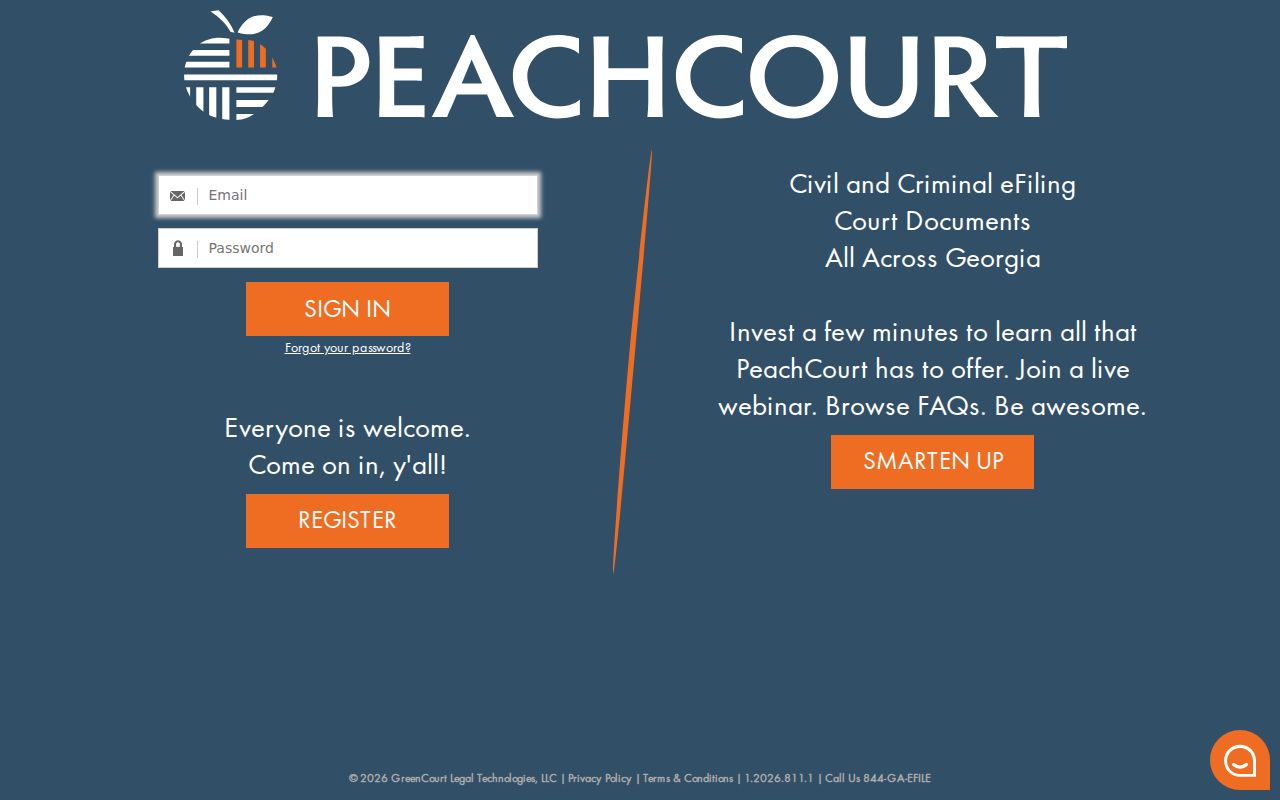
The portal handles access and filing. The Superior clerk still keeps the official case file and provides official copies.
No document appears: Note the action number and docket entry, then ask the clerk whether the image is restricted, not digitized, or available by copy request.
Older Glascock Civil Files
When PeachCourt does not return an older Superior matter, call Kristie Stephens's office at 706-598-2084. Ask where the docket lives. It may sit in a paper file. A minute book, an archive, or another local record set is possible too. For Magistrate civil matters, call 706-598-3241. The counter and mail both work as fallback channels. The office publishes no hours, terminal access rules, copy cutoff, or local request form. Ask about those when you call.
A written Georgia Open Records Act request should name a describable public record, the court, and a useful date range. The Attorney General's framework asks for a response within three business days when possible, or a time and cost estimate if production takes longer. The county lists no dedicated court-records email or fax, so confirm the right recipient by phone before you send anything.
Fees are the other gap. No official Glascock source gives a Superior plain-copy or certified-copy price. PeachCourt transaction pricing is not the county clerk's fee schedule. State guidance on ordinary public-record copies is one thing. It should not be treated as the fixed price of a certified judgment either.
Who Can See Civil Dockets
Access starts with the rules. Uniform Superior Court Rule 21 makes court records public unless law or procedure limits them. A sealing request requires the legal showing that rule describes. Rules 21.6 and 36.17 cover sensitive identifiers and redaction. Docket metadata may be public. Even so, the portal may mask a protected filing or withhold its image.
Georgia's Open Records Act governs the rest. O.C.G.A. §§ 50-18-71 and 50-18-72 set out access procedures, reasonable fees, exemptions, and protected data. The Act does not override a court sealing order. Nor does it override a law shielding a confidential case. Family-related entries, adoption material, and juvenile records call for particular care.
Key rules:
Uniform Superior Court Rules 21, 36.17, and 39.2 address public access, protected identifiers, and civil docket fields.
Georgia Open Records Act guidance explains written requests, response timing, costs, and exemptions.
Need the official judgment? Request a certified copy from the clerk. An online docket summary is handy for tracking the case, but it is not the clerk-authenticated judgment itself.