
Glascock County Criminal Docket Searches
Start with whatever paper you already have. A notice, citation, or court calendar names the court. That tells you where the criminal docket lives. In Glascock County, felonies belong to Superior Court. Kristie Stephens, Clerk of Superior Court, keeps that Superior criminal docket for the county. The Georgia Courts E-Access directory points Glascock Superior searches to PeachCourt. Keep in mind the directory is a list of routes, not one free statewide index. PeachCourt also demands registration and a sign-in before any case or document function opens up. The case number plus the court is the best search pair. A party name works too for Superior criminal cases. A common name calls for care, though. Match the court, status, attorneys, and charge fields before you trust a result. And when nothing comes back online, do not assume the matter vanished. Delayed data, older files, and lower-court cases can all stay out of that one service. So can restricted material.
- Identify the court from the source paper.
- For Superior Court, register or sign in to PeachCourt.
- Select Glascock County and the court, then enter the case number or party name.
- Compare the newest docket event with any calendar notice.
- Ask the correct clerk for inspection or a copy when needed.
Glascock PeachCourt Criminal Access
For participating Superior records, the named online path is the PeachCourt case-docket route. Its own criminal help page says a case view may carry the assigned judge, status, co-defendants, prosecutor, and defense attorney. It can also show charges, disposition dates, calendar events, proceedings, and documents. Coverage shifts from court to court. Here is one more wrinkle. A docket row and a document image are separate products. Some images carry a separate purchase price. The official portal page shows the generic case-docket route without opening any private party record.
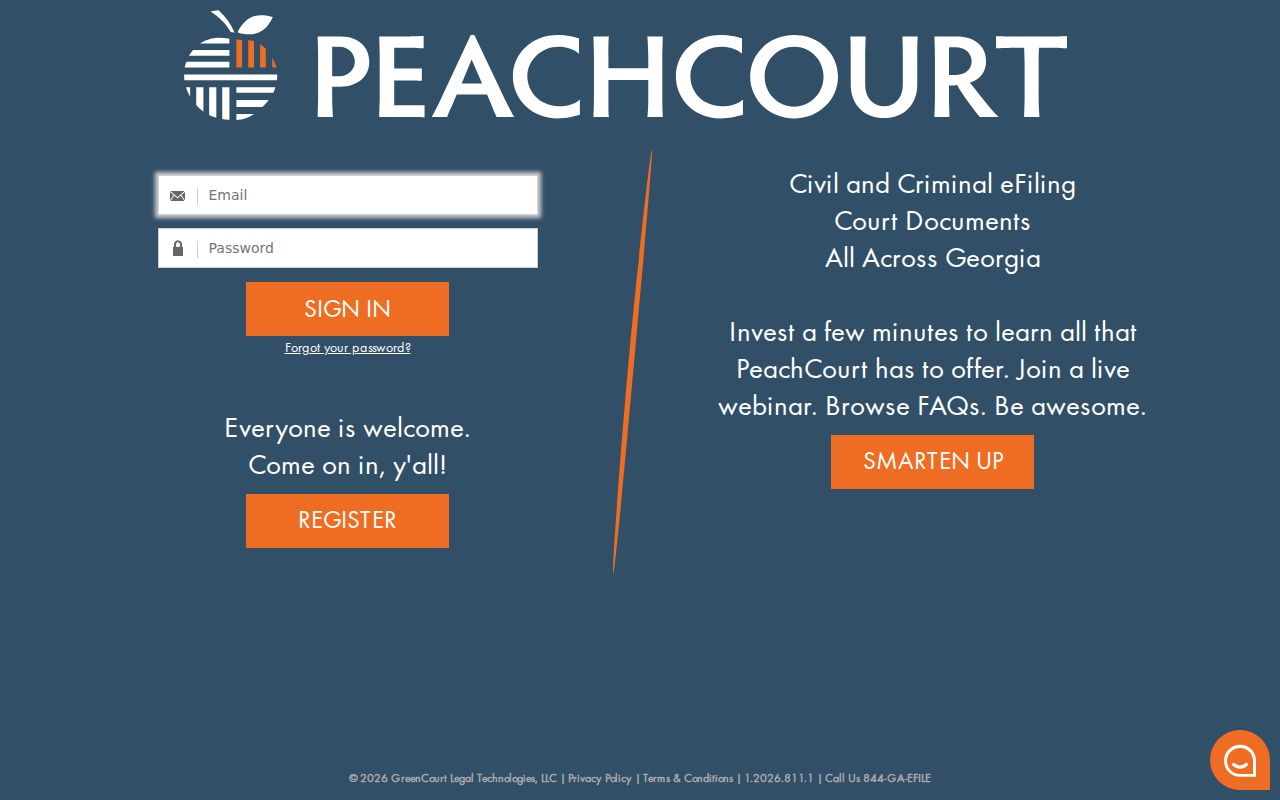
This route covers Superior cases only. It does not replace the Probate/Magistrate clerk, the official court file, or direct confirmation of a setting.
Criminal Dockets: What They Show
The core criminal docket fields come from Georgia Uniform Superior Court Rule 39.3. That register can hold an indictment or accusation number, the filing date, and the defendant with an Offender Tracking Number. It can also list defense counsel, each count, and the offense class. The judge appears there too. So do the plea and plea date, jury status, and a disposition for every count. It may also cross-reference what came later. Think motions for new trial, appeals, or a remittitur sent back by an appellate court.
| Case identifier | Indictment or accusation number and filing date. |
|---|---|
| People and roles | Defendant, attorneys, co-defendants, and judge when available. |
| Charges | Separate counts, charge description, and offense class. |
| Settings | Calendar events, hearing dates, and proceedings. |
| Outcome | Plea, jury status, disposition by count, and later review. |
A disposition is the recorded result, never the charge itself. A case style is just the short caption, and a calendar event proves nothing about whether the event happened as first scheduled.
Glascock Criminal Pretrial Fields
An official historical Glascock Superior criminal pretrial calendar shows how the local format works. The header names the court and the calendar type. It also gives the judge or term details, the calendar date and time, and the print date. Each row can hold a case number, case style, count number, and charge. Offense class and offense date can appear there. So can the defense attorney, bondsman, and bond amount. It is an old document. Use it to learn the layout, not as a current list of cases.
Pretrial: A proceeding before trial, not a final outcome.
Count: One charged offense within an indictment or accusation.
Bond: Release or security information that may appear on a calendar.
Setting: A scheduled event that may later be reset.
Older entries seem to pair a year with CR and a number, sometimes plus a letter suffix. That is not a current numbering rule. Ask the Superior clerk to confirm any modern identifier.
Criminal Case Stages on the Docket
A Superior criminal docket builds in time order. Formal charging starts with an indictment or accusation. Arraignment then records the response. Pretrial entries can include appearances, motions, notices, subpoenas, calendar settings, and continuances. A plea or trial pushes the case toward a disposition, and sentencing plus later motions can add entries after that first outcome.
Docket flow: Filing › Arraignment › Pretrial › Plea or Trial › Disposition › Sentencing
Read the latest entry, not just the first date you spot. A continuance only moves a setting. It never dismisses the case. A static PDF and PeachCourt can disagree. The clerk's current record and the court's order control. The Glascock County docket search lays out the broader lookup route.
When Glascock Listings Disagree
The Toombs Judicial Circuit spans six counties. A circuit calendar can mix Glascock settings with other counties' cases. Check the county, the court, and the case number before you rely on a row. A PDF can go stale. Think a reset, a closure, or an emergency order. PeachCourt may show a newer event. Even that view deserves a confirmation when attendance matters. For a Superior criminal case, call the Superior clerk at 706-598-2084. Jury and calendar questions have a published line at 706-598-0566. Prosecution questions go to the Toombs Circuit District Attorney at 706-595-7175. That office does not certify the clerk's docket.
A date looks wrong: Give the clerk the court and case number, identify the conflicting sources, and ask for the current setting before traveling.
Glascock County Criminal Docket Courts
No single court owns the Glascock County criminal docket. Felony trials sit in Superior Court. Probate Court takes misdemeanor traffic citations plus game and fish violations. Magistrate Court handles warrants, bad-check matters, specified misdemeanors, and county ordinance violations. Juvenile Court covers delinquency. Its records are not a public name-search product.
| Matter | Route | Contact |
|---|---|---|
| Superior felony | PeachCourt, circuit calendar, or Superior clerk | 706-598-2084 |
| Probate traffic | Georgia Probate Records or Probate clerk | 706-598-3241 |
| Magistrate warrant or ordinance | Magistrate clerk; no public local portal found | 706-598-3241 |
| Juvenile delinquency | Authorized access through Superior/Juvenile clerk | 706-598-2084 |
County sources list 74 East Main, Gibson, for the courthouse and 62 East Main Street for Probate/Magistrate. Call first. Counter hours, terminal access, and the exact counter are not published.
Glascock Criminal Clerk Fallbacks
Phone the right clerk first when the portal fails. Counter inspection is the next route. No Glascock page confirms a free public terminal there. You can also mail a written request to the office that holds the criminal docket. A general county contact form exists. It is not labeled for court-record requests. Leave out needless private data.
Georgia's Open Records Act backs a written request for any describable public record. The Attorney General asks for a response within three business days when possible. Otherwise, expect a time and cost estimate. For an older Superior file, ask Kristie Stephens's office. Ask about paper records, minute books, or archives. Probate or Magistrate files go through Kristin Daniel's office at P.O. Box 277, Gibson, GA 30810.
No Glascock page publishes a certified-copy form. It lists no Superior copy fee, fax, drop box, or promised turnaround either. So confirm the copy type, price, payment method, and delivery plan before you commit.
Glascock Juvenile Criminal Boundaries
Juvenile Court records sit with the Superior clerk. A public name search is a different matter. Georgia's juvenile data exchange limits access to authorized attorneys. Glascock offers no public juvenile portal. A missing search result proves nothing about whether a juvenile case exists.
Ask the Superior and Juvenile clerk about the lawful process for access. A broad request never substitutes for a court order or rule that actually grants it. The same caution applies when PeachCourt hides an image. Metadata can stay visible while the document itself is sealed, restricted, excluded, or simply not digitized.
Access Rules for Criminal Dockets
Uniform Superior Court Rule 21 sets Georgia's public-access baseline. Courts can restrict access once the required legal showing is made. Rules 21.6 and 36.17 protect sensitive identifiers. PeachCourt may exclude sealed documents, adoption records, and unexecuted proposed orders. Record restriction under O.C.G.A. §35-3-37 is its own process. It is not automatic deletion from every clerk record. The Georgia Courts record-restriction resource walks through the official steps.
This guidance distinguishes a statutory restriction request from a search failure or sealed filing.
Key rules:
Uniform Superior Court Rules 21 and 39.3 set the public baseline and docket fields.
O.C.G.A. §§ 50-18-71 and 50-18-72 address requests, fees, exemptions, and redaction.